
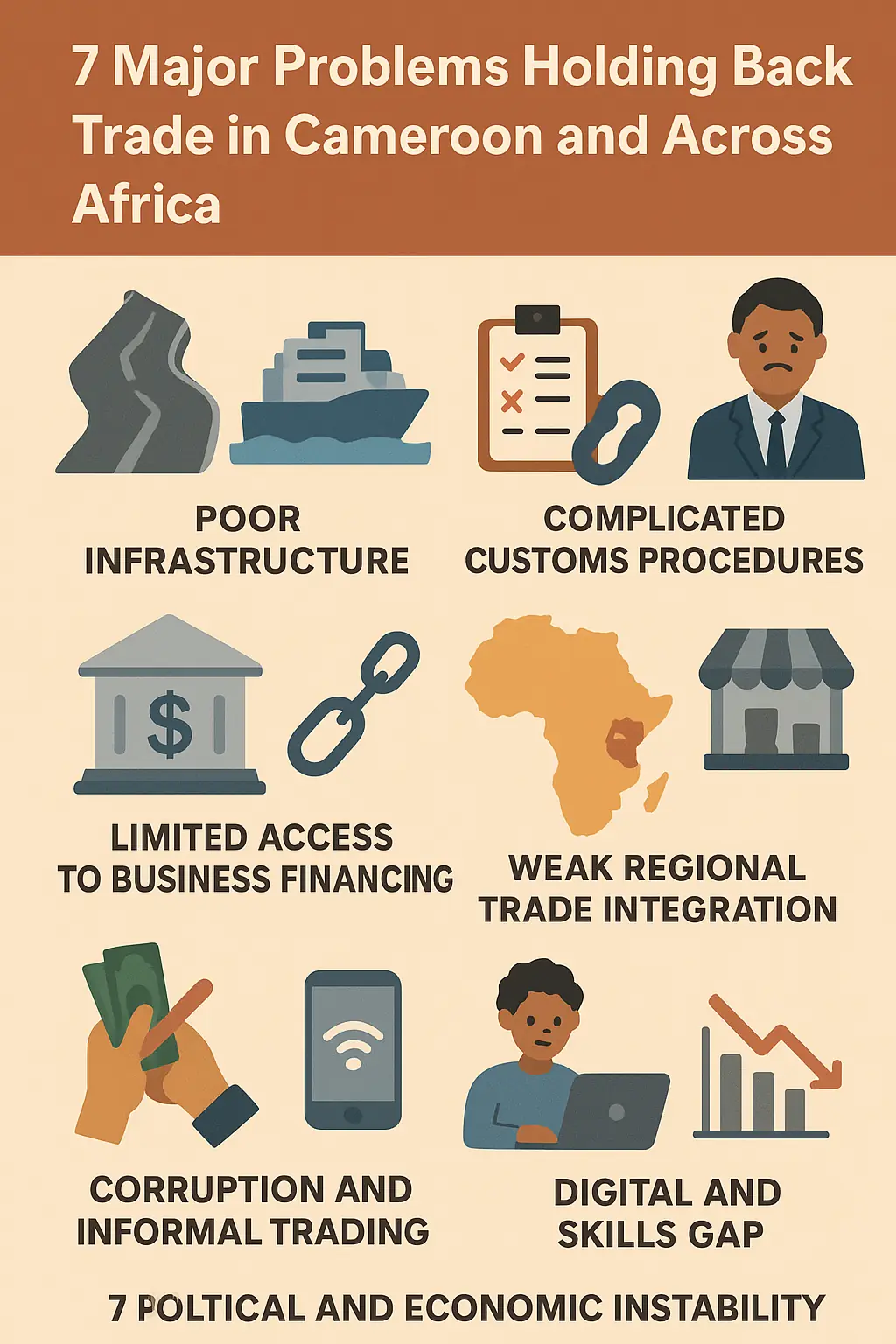
Trading has always been at the heart of African economies. From the bustling open-air markets in Douala to cross-border deals between West African countries, commerce is part of daily life. Yet, despite Africa’s rich resources, vibrant cultures, and growing young population, trade in many parts of the continent — including Cameroon — is still struggling to reach its full potential.
Below, we break down the major challenges holding back African trade and how they specifically impact Cameroon.
- Poor Infrastructure
One of the biggest barriers to trade in Cameroon — and across Africa — is inadequate infrastructure.
Roads: Many rural areas remain disconnected from main trade hubs due to bad road conditions. Transporting goods from farms to cities can take days instead of hours, increasing costs and spoilage rates.
Ports: The Douala port, for example, faces congestion, outdated facilities, and slow clearance processes. These inefficiencies discourage both importers and exporters.
Electricity & Internet: Unstable electricity supply and patchy internet connections make modern e-commerce and logistics operations harder to run.
- Complex and Costly Customs Procedures
Bureaucracy can be a nightmare for traders. Importers often deal with excessive paperwork, long clearance times, and sometimes even informal payments to move goods. These hurdles:
Increase the cost of doing business
Discourage small businesses from engaging in international trade
Make local products less competitive abroad
- Limited Access to Financing
Many traders, especially small and medium-sized enterprises (SMEs), struggle to secure affordable loans. Banks often demand high collateral and have high interest rates, making it difficult for businesses to:
Buy inventory in bulk
Invest in storage or transport
Expand into new markets
This creates a cycle where small businesses remain small because they cannot access the resources to grow.
- Weak Regional Integration
While African leaders have pushed for initiatives like the African Continental Free Trade Area (AfCFTA), regional trade barriers still exist. In Central Africa, countries often have:
Different currency zones
Varied regulations and taxes
Border delays that reduce competitiveness
In Cameroon, exporting to neighboring countries like Nigeria or Gabon still comes with challenges such as differing product standards and customs policies.
- Corruption and Informal Trading
Corruption in both government and private sectors affects trade efficiency. Informal trading — where transactions are off the record — may help individuals avoid taxes, but it hurts national revenue and makes it harder to regulate quality standards.
- Skill Gaps and Technology Lag
Trade today is increasingly digital. Many African traders, especially in rural areas, lack:
Digital literacy for e-commerce
Access to modern payment systems
Skills in supply chain management
This limits their ability to compete with international suppliers and take advantage of global markets.
- Political and Economic Instability
Political unrest or sudden policy changes — such as abrupt border closures or new tax rules — can disrupt trade overnight. Investors and foreign partners hesitate to engage when the business climate feels unpredictable. The Way Forward
While the problems are real, solutions exist:
Invest in infrastructure: Better roads, ports, and digital networks can slash costs and improve efficiency.
Simplify customs: Digitalizing clearance systems and reducing paperwork can speed up trade.
Expand financing options: Microfinance, fintech, and government-backed loan schemes can empower SMEs.
Push regional integration: Harmonizing trade regulations will help African goods flow more freely.
Promote digital skills: Training programs and mobile-friendly tools can connect traders to new markets.
If Cameroon and other African nations tackle these issues head-on, the continent’s trading potential could finally match its natural wealth and human talent.
💡 Bottom line: Africa — and Cameroon in particular — is not lacking in opportunity. What’s missing is the infrastructure, policy consistency, and financial support to unlock it.